&geometry(315x90) "Gippsland Veterinary Group")
Equine Castration - What Horse Owners Need to Know
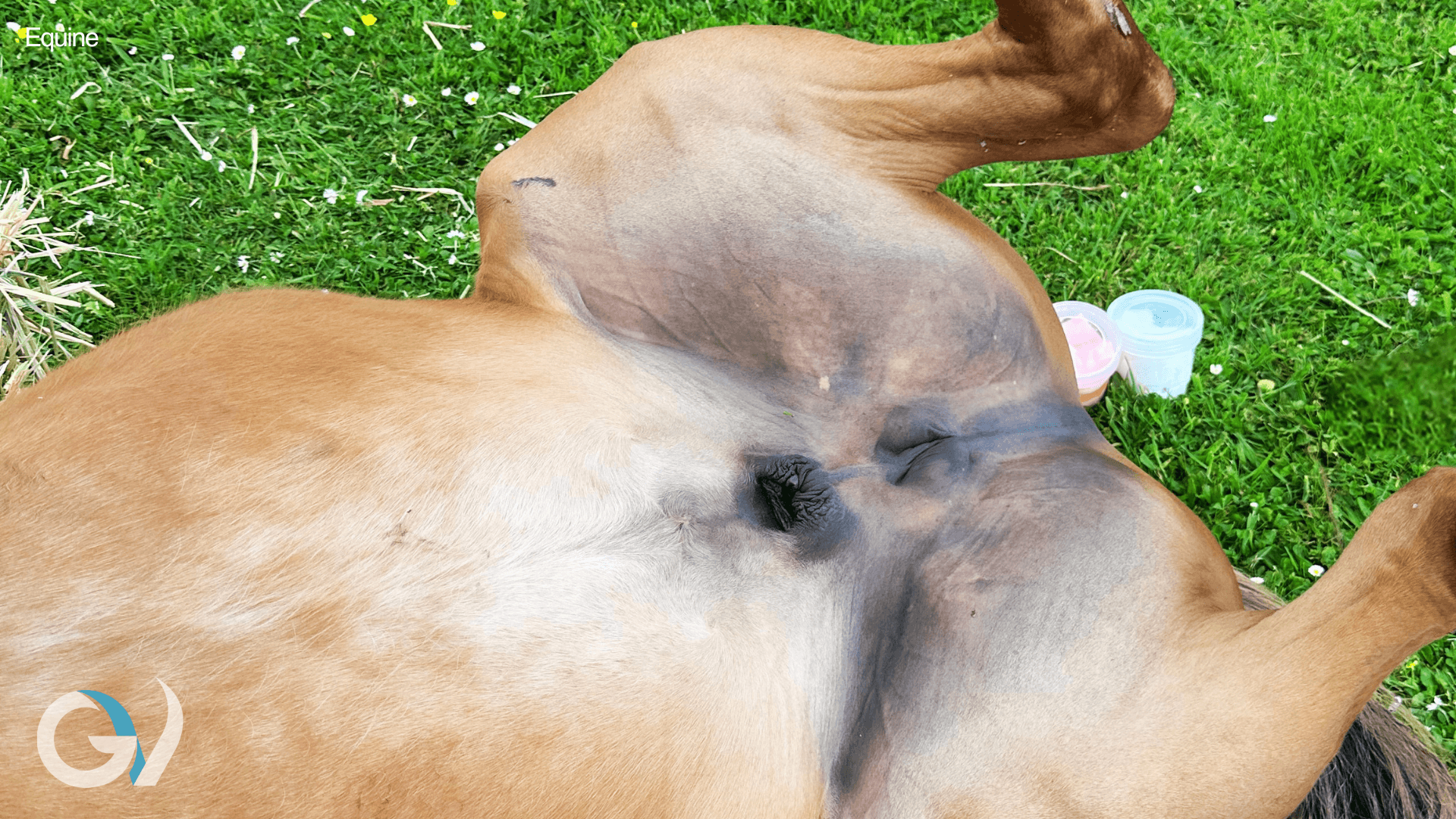
Castration, commonly known as gelding, is one of the most common surgical procedures performed in horses. It is usually performed in young colts with two fully descended testicles. We recommend that your colt is at least six months of age and well handled prior to surgery.
Preparation
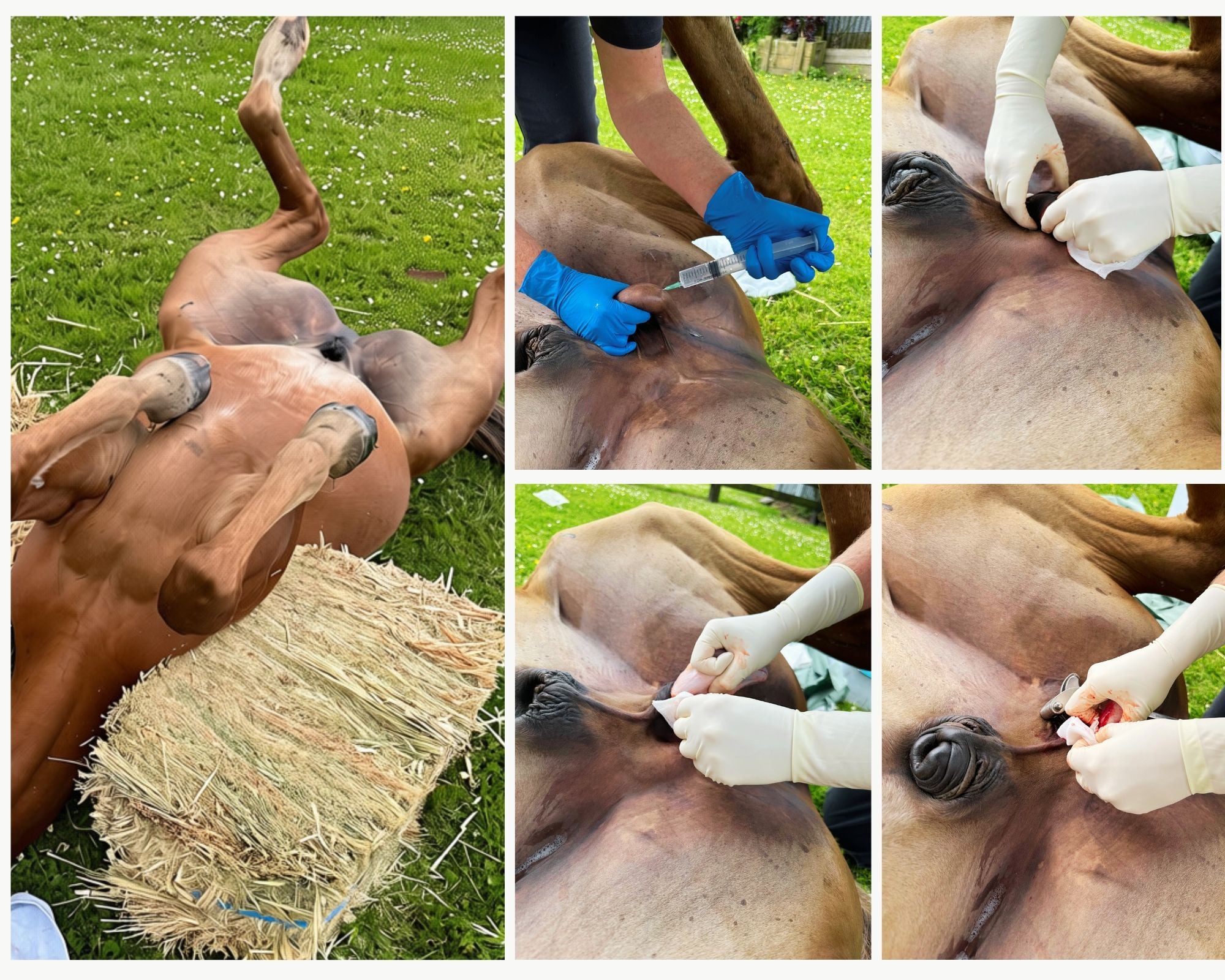
We can perform castrations on farm or at our Livestock & Equine Centre in Leongatha, where we offer a discounted clinic price. For on-farm castrations, we require a large, dry, clean and level area where the procedure can be performed safely. A couple of hay bales may also be useful to assist with positioning your horse during surgery.
Your colt should have two fully descended testicles prior to castration. Occasionally, one testicle does not descend into the scrotum. These horses are known as cryptorchids or "rigs". Removal of an undescended testicle is more complicated than a routine castration and should generally be performed at a referral centre by a veterinarian experienced in this type of surgery.
Your colt should be halter-trained and accustomed to being handled before surgery so that he can be safely managed during and after the procedure. Keeping your colt calm prior to surgery is also important.
Food and water can generally be provided as normal before surgery, although we recommend avoiding high-bulk feeds such as large amounts of hay and hard feed immediately before the procedure. Your veterinarian will provide specific instructions for your horse.
Ideally, your horse will already be appropriately vaccinated against tetanus. If this is not the case, we can commence or update tetanus vaccination at the time of surgery, but we will also generally recommend further protection with tetanus anti-toxin. This ultimately adds to the overall cost of the procedure, therefore we strongly recommend that your colt is fully vaccinated prior to surgery.
If you have noticed that your colt has an abdominal or umbilical hernia, please let us know before surgery. We can discuss whether surgical correction is required and ensure the appropriate equipment is available.
Our routine castrations are performed under general anaesthesia, with the horse carefully positioned on his back or side.
Surgery
Before surgery, your veterinarian will examine your colt to confirm that both testicles have descended and assess his overall health to ensure he is suitable for sedation and anaesthesia.
Your colt will receive a sedative, anti-inflammatory medication and other appropriate medications, including tetanus protection and antibiotics where indicated. Once adequately sedated, a general anaesthetic is administered, rendering the colt unconscious for the procedure.
Once positioned for surgery, the scrotum and surrounding area is thoroughly cleaned with an antiseptic solution and the testicles desensitised with local anaesthetic.
The testicles are removed through two separate incisions. An instrument called an emasculator is used to clamp and sever the spermatic cord. The emasculator is left in place for an appropriate period of time to crush the blood vessels and form a secure blood clot, helping to reduce the risk of bleeding.
In older horses or donkeys, we may also place an absorbable suture around the spermatic cord to further reduce the risk of bleeding.
The two surgical incisions are generally not stitched but left open to heal, which usually takes 1-2 weeks. Leaving the incisions open allows fluid to drain freely, helping to reduce swelling and the risk of infection.
Aftercare
The management of your horse following castration is vital to minimise pain, swelling, bleeding and infection.
Your gelding should be monitored closely for the first few hours after surgery and kept reasonably confined for approximately the first 12 hours. This helps reduce the risk of disrupting the blood clot and causing excessive bleeding.
Your horse may remain sleepy or uncoordinated for several hours following sedation and anaesthesia. He should not be offered food until he is sufficiently awake and your veterinarian has advised that it is safe. Water should be available as directed by your veterinarian.
After the initial recovery period, regular movement is very important. Your gelding should be turned out and encouraged to exercise to help reduce swelling and encourage drainage from the surgical sites. If he is not moving sufficiently on his own, in-hand walking and/or lunging for a minimum of 30 minutes each day is recommended, unless your veterinarian advises otherwise.
Medications
Your gelding may be prescribed a combination of anti-inflammatory medication and antibiotics following surgery, depending on his individual circumstances and the surgical procedure. For horses that are prone to stress or gastric ulcers, we may also prescribe a short course of preventive gastric ulcer medication.
All medications should be given exactly as directed by your veterinarian.
Approximately one to two weeks after castration, your horse should no longer be able to impregnate a mare. Testosterone concentration drops to baseline (gelding) levels within 24 hours of surgery, however the expression of male sexual behaviour (libido) may take weeks or longer to subside. For these reasons, it is safest to keep newly gelded horses separate from mares for several (at least four) weeks.
Geldings that were castrated after reaching sexual maturity may retain some stallion-like behaviours or characteristics, as learned behaviours do not necessarily disappear despite much-reduced testosterone levels.
Complications
Serious complications following castration are uncommon, but it is important to know what to look for during your horse's recovery.
1. Bleeding
Some bleeding from the surgical site is expected for up to 24 hours after surgery. You should always be able to “count the drips.” Blood flowing faster than this requires veterinary attention.
2. Swelling
Some minor swelling is normal following castration. However, if swelling is progressively increasing each day, remains significant a week after surgery, or is associated with lethargy or pain, please contact your veterinarian.
Keeping your gelding moving regularly after surgery is very important to help reduce swelling and encourage drainage.
3. Infection
Infection of the surgical wounds can result in pain, swelling around the surgical site or sheath, heat, abnormal discharge and sometimes lethargy. If you suspect your horse has developed an infection, please contact us.
4. Exposed Tissue
Occasionally, small pieces of tissue can protrude through the surgical wounds. This is usually a small piece of fat or surrounding soft tissue and may require veterinary attention.
In extremely rare cases, intestines can emerge through the surgical wound. This may appear as a collection of sausage-like structures protruding from the incision.
If you see tissue that you suspect may be intestine, contact us immediately. Do not attempt to push the tissue back into the wound yourself. Keep the horse as calm as possible while waiting for veterinary assistance and do not move him.
If you are ever concerned about your horse's recovery following castration, please contact us. Prompt veterinary assessment can help prevent minor complications from becoming more serious.
If you would like to book your colt or stallion in for castration, or would like to discuss whether your horse is suitable for the procedure, please call us on 03 5662 2251 (ext 2).