&geometry(315x90) "Gippsland Veterinary Group")
Winter Feeding for Horses | Essential Nutrition Tips
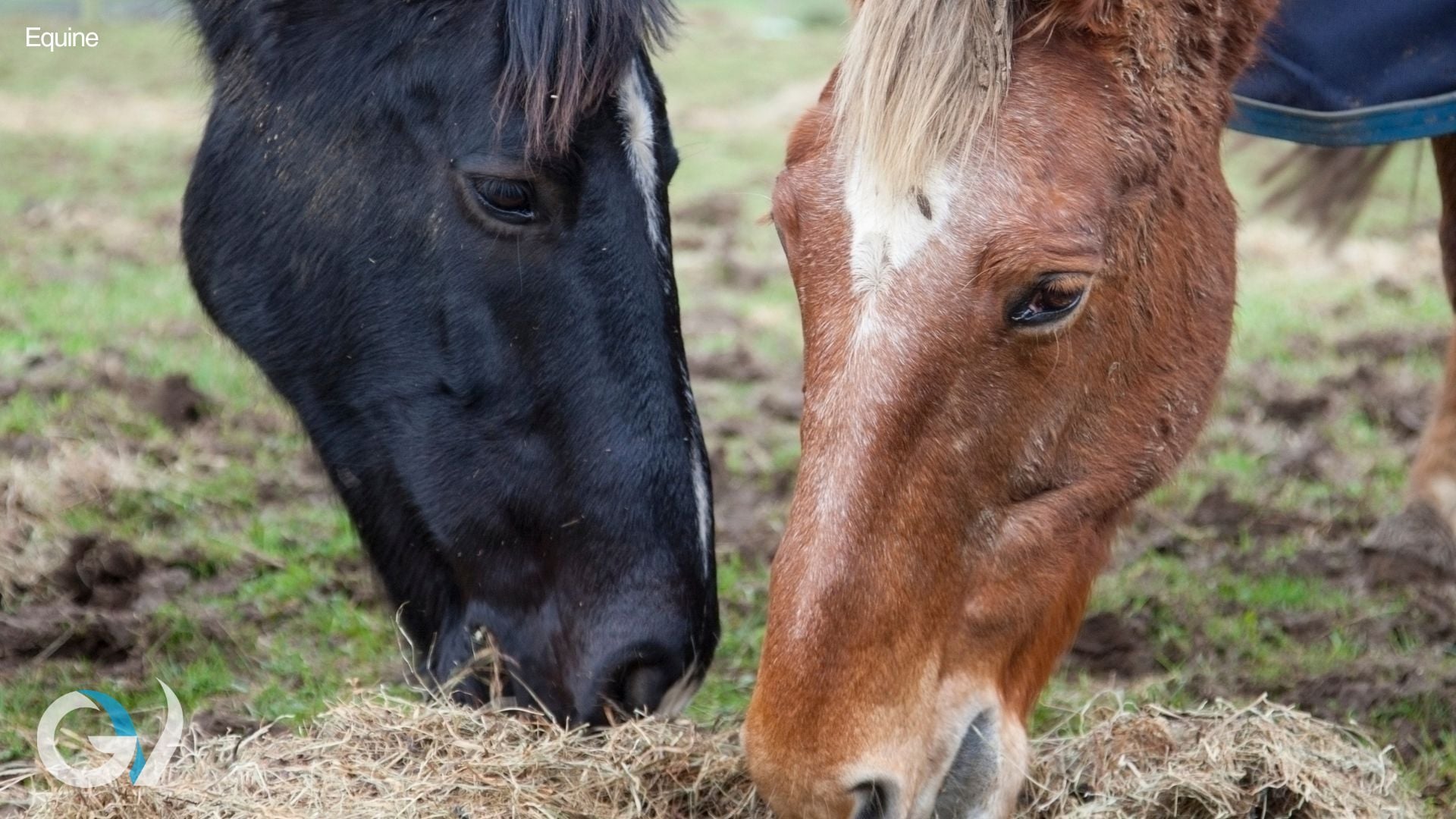
Winter feeding for horses
Keeping your horse healthy through the colder months
As temperatures drop and pasture quality declines, winter brings new nutritional challenges for horses across Gippsland. Following a dry autumn, many paddocks provide very little nutritional value, making it even more important to review your horse’s feeding program before winter sets in.
While every horse benefits from a balanced winter diet, older horses, growing youngsters and those in regular work often need closer monitoring to ensure they are maintaining condition and receiving enough energy to stay healthy.
Forage is the foundation
One of the most important parts of a winter feeding plan is providing enough forage. Unlike us, horses generate much of their body heat through the fermentation of fibre in the hindgut, so plenty of hay does much more than simply fill their stomach.
Most horses require around 1.5 to 2.5 percent of their bodyweight (10kg hay/500kg horse!) in forage dry matter each day to maintain weight, while horses needing to gain condition may require significantly more, alongside suitable higher energy feeds.
Good quality hay should form the basis of the winter diet whenever pasture availability or quality declines.
Keep a close eye on body condition
A thick winter coat can make horses appear to be in better condition than they actually are. Instead of relying on appearance alone, regularly feel along your horse’s ribs, spine and hindquarters to assess their body condition.
Routine body condition scoring allows subtle weight changes to be detected early, making it much easier to adjust feeding before significant weight loss occurs.
Older horses deserve particular attention, as they may find it more difficult to maintain weight during the colder months.
Hydration remains essential
Although horses often drink less in cold weather, their need for water does not decrease. Reduced water intake can increase the risk of dehydration and impaction colic, making hydration an important part of winter management.
Simple strategies such as wetting hard feeds, keeping water troughs clean and free from ice, offering lukewarm water after exercise and ensuring adequate salt intake can all encourage horses to drink more.
Winter pasture can present hidden risks
While winter grass may seem harmless, frosty mornings can lead to increased sugar concentrations within pasture. For horses with equine metabolic syndrome (EMS), Cushing’s disease (PPID) or a history of laminitis, this can significantly increase the risk of a painful laminitis episode.
Where possible, susceptible horses should avoid grazing frosty paddocks and instead be offered low sugar hay until conditions improve. It is also important to remember that horses with metabolic conditions can develop laminitis at any time of year in our region, not just during spring.
Meeting nutritional requirements
Winter pasture is often deficient in important vitamins and minerals, even when there appears to be plenty of grass available.
If your horse is not receiving a nutritionally balanced hard feed, a vitamin and mineral supplement or balancer pellet may help ensure essential nutrient requirements are being met. A balanced diet supports healthy muscles, immune function, hoof quality and overall wellbeing throughout winter.
Whenever introducing new feeds or supplements, changes should always be made gradually over seven to ten days to allow the digestive system to adapt and reduce the risk of digestive upset.
The importance of dental health
Dental health plays a vital role in your horse’s ability to maintain weight. Horses with worn, painful or diseased teeth often struggle to chew hay effectively, reducing fibre digestion and nutrient absorption.
Older horses and those that have not had a dental examination within the past year are particularly at risk. Regular dental examinations allow problems to be identified early and treated before they begin affecting body condition and overall health.
Supporting your horse this winter
Every horse has different nutritional requirements, and winter is an ideal time to review your feeding program and overall health management. Ensuring your horse has adequate forage, balanced nutrition, good hydration and regular dental care will help them stay healthy, comfortable and in good condition throughout the colder months.
If you have any concerns about your horse’s weight, feeding program or dental health this winter, our equine veterinary team is always happy to help. We can provide tailored advice to ensure your horse receives the nutrition and care they need to thrive until spring.