&geometry(315x90) "Gippsland Veterinary Group")
Understanding Laminitis in Horses
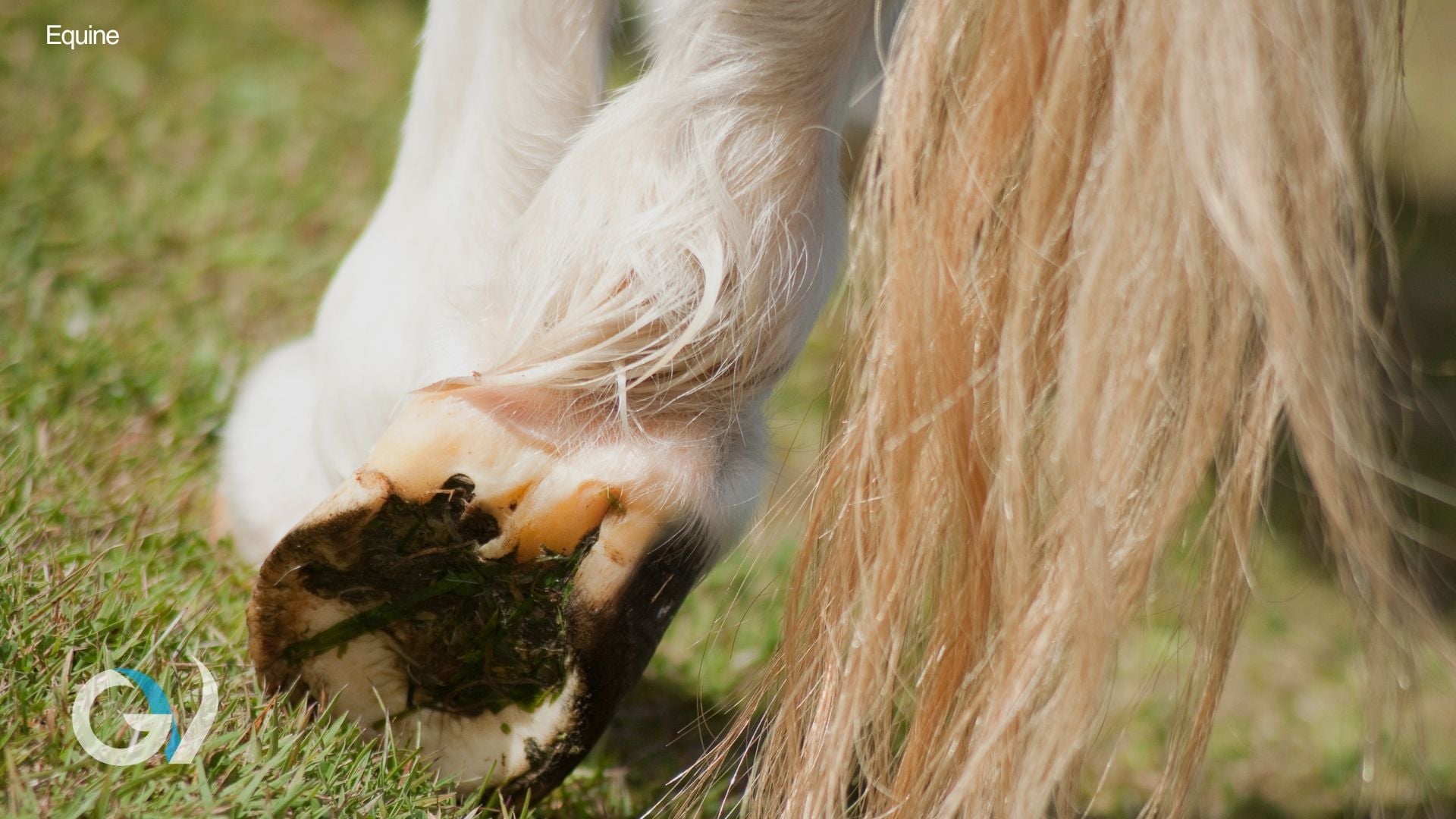
Laminitis in horses: what owners need to know
What is laminitis?
Laminitis is a painful and potentially life-threatening condition that affects the sensitive laminae inside the hoof. The laminae are a highly specialised soft tissue that connect the hard outer hoof capsule to the internal pedal bone. When they become inflamed, the hoof loses stability, causing severe pain and lameness.
Chronic or severe acute laminitis can lead to pedal bone rotation or sinking, which greatly worsens prognosis and requires urgent veterinary care. Laminitis can also result in abnormal hoof growth, infections, and long-term mobility issues.
Why does laminitis occur?
A common misconception is that laminitis is caused by lush green grass. In reality, laminitis is mostly (80-90% of cases seen in practice) triggered by hormonal and metabolic changes; especially high insulin levels.
When a horse eats feeds high in sugars and starches (such as lush pasture, grain, or treats), insulin rises to control blood sugar. In some horses, this response is exaggerated or prolonged; we call this insulin dysregulation, and persistently high insulin damages the laminae inside the hoof over time.
So the problem isn’t as simple as “green grass”; it’s more how the horse responds to the blood glucose spikes caused by grazing lush pasture.
Healthy horses can graze without issue. Horses with insulin dysregulation cannot.
Common hormonal conditions linked to laminitis
Equine Metabolic Syndrome (EMS):
EMS is a clinical syndrome that always includes insulin dysregulation, along with regional or generalised obesity and increased laminitis risk. Typical signs include a cresty neck and fat pads over the tail head or shoulders. EMS horses are often “easy keepers”.
All EMS horses have insulin dysregulation, but not all horses with insulin dysregulation have EMS.Pituitary Pars Intermedia Dysfunction (PPID or Cushing’s disease):
A hormonal disorder that is most prevalent in older horses. PPID can lead to insulin dysregulation and laminitis, even in horses that are not overweight. Signs include a long or curly coat, muscle loss, and increased drinking or urination.
*Why not all horses with insulin dysregulation have EMS*
Insulin dysregulation (ID) means insulin rises too much or stays high for too long after eating sugar or starch.
EMS is one condition that always includes ID, but it’s not the only cause.
Other causes of ID include:
- PPID (Cushing’s disease)
- Stress or illness
- Genetic predisposition
Key takeaways:
- Grass, grain, or treats can all trigger laminitis if they cause an insulin surge in a susceptible horse
- A horse can have insulin problems without being overweight or having EMS
- For laminitis prevention, what matters most is controlling insulin - not just weight
Other causes of laminitis (less common)
- Systemic illness: sepsis or endotoxaemia (e.g., retained placenta, severe diarrhoea)
- Abnormal weight bearing: excessive load on one limb can trigger laminitis in the supporting hoof
Clinical signs
Look for:
- Stiff, short steps or reluctance to move
- Shifting weight between feet
- Resistance to walking on hard surfaces or gravel
- Lameness (worse on turns)
- “Saw-horse” stance (leaning back to relieve toe pressure)
- Bounding digital pulses
- Heat in the hoof
- Increased lying down
Diagnosis
Laminitis is diagnosed based on history, clinical examination, and assessment of the feet. Further workup often includes:
X-rays: to visualise the pedal bone position and detect rotation or sinking. This guides farriery and prognosis for recovery.
Blood tests: to check for insulin dysregulation and PPID.
EMS/insulin testing: Quick and available in-clinic.
PPID testing: Most accurate in autumn due to seasonal variation.
Retesting 4-6 weeks after initiating treatment is often recommended to monitor response.
Treatment & Management
- Relieve pain and inflammation: anti-inflammatories, rest, and corrective farriery.
- Confinement: reduces movement and mechanical stress on weakened laminae, lowering the risk of pedal bone displacement.
Biomechanical support: appropriate trimming, shoeing, or padding to improve comfort and reduce strain (ideally guided by X-rays).
Dietary control: restrict sugars; avoid lush pasture and energy-rich feeds. Contact us to help create a safe diet plan for your horse.
Manage underlying conditions: medication is available (pergolide) to manage PPID effectively and advanced therapies are sometimes recommended for metabolic cases which are not responding to management changes such as dietary restriction. In these cases, drugs like SGLT-2 inhibitors (e.g., ertugliflozin) may be prescribed to reduce insulin levels. These medications require close veterinary supervision.
Prevention tips
- Maintain a healthy weight and body condition score
- Test for EMS and PPID regularly, especially in autumn
- Avoid sudden diet changes and restrict access to lush pasture
- Provide low-sugar forage and avoid energy-rich feeds
- Schedule regular hoof care and farrier visits
- Use grazing muzzles to limit grass intake for at-risk horses
- Consider track systems or dry lots to provide turnout while limiting access to high-sugar pasture
- Monitor for early signs of discomfort or lameness and act promptly
What to do if you suspect laminitis
Act quickly: contact us immediately.
Confine your horse: restrict to a small, soft-surfaced area to limit movement.
Remove access to grass and sugary feeds: provide low-sugar hay (ideally pre-soaked for 1-2 hours) and fresh water.
- Do not force movement: walking can worsen damage and increase pain.
Follow veterinary advice: we may recommend pain relief, diagnostic tests, and a tailored management plan.
Important: If your horse is on medication specifically for PPID or EMS and becomes dull or stops eating, stop treatment and contact us immediately. Always provide fresh water and avoid prolonged fasting. Some medications are not suitable for pregnant or lactating mares.