&geometry(315x90) "Gippsland Veterinary Group")
Understanding Hernias in Young Horses
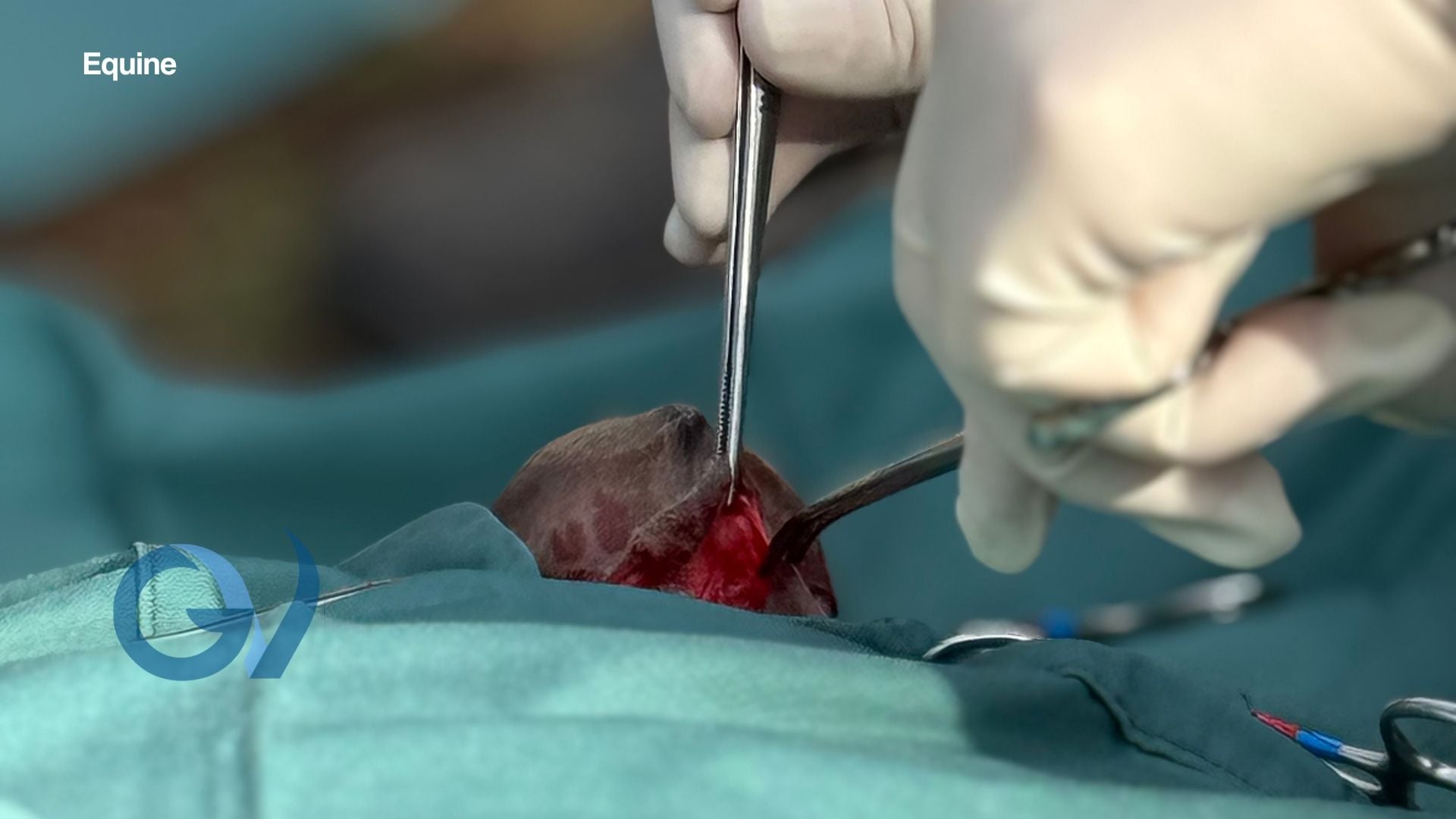
Equine hernias - what owners need to know about diagnosis and repair
Hernias are relatively common in foals and young horses and can be concerning for owners. They appear as a soft swelling on the abdomen (belly) or groin. The good news: most hernias can be treated successfully, and surgical repair is usually straightforward when addressed early.
What is a hernia?
A hernia occurs when a small opening in the abdominal wall allows tissue (such as fat or intestine) to protrude, forming a soft bulge under the skin. In most cases, this gap is present from birth and may not close naturally, resulting in an umbilical hernia. Less commonly, foals develop inguinal hernias in the groin region.
Common types of hernia
Umbilical Hernia:
Appears where the umbilical cord was attached to the foal. Small hernias may resolve as the foal grows; larger ones often require surgery.Inguinal Hernia:
Occurs in the groin, more common in colts. Can range from mild to severe. If bowel becomes trapped, it is a medical emergency requiring immediate veterinary care.
When is surgery needed?
Not all hernias require immediate surgery. Your vet will assess:
- Size of the defect
- Age of the horse
- Whether the swelling can be reduced
Surgery is generally recommended if:
- The hernia is large
- The opening won’t close naturally
- Tissue becomes trapped
- The foal shows discomfort or colic risk
Early surgical repair has a high success rate.
What happens during surgery?
- Performed under general anaesthesia at our equine clinic or sometimes on-farm
Contents are returned to the abdomen, and the defect is closed with strong, absorbable sutures
- The site is cleaned and monitored during recovery
Aftercare & recovery
Foals usually recover well. Care includes:
- Short period of stable rest
- Controlled exercise as healing progresses
- Monitoring incision for swelling or discharge
- Checking temperature and appetite daily
Most horses return to normal turnout and gradual training once fully healed.
Prognosis
The outlook is excellent with early assessment and timely intervention.
When to call us
Seek advice if you notice:
- Swelling around the umbilicus or groin
- Signs of pain
- A firm swelling that cannot be pushed back
- Behavioural changes suggesting discomfort
Contact our Equine team on 5662 2251 (ext 2) for assistance.