&geometry(315x90) "Gippsland Veterinary Group")
Prevention of Pinkeye in Cattle
Pinkeye (infectious bovine keratoconjunctivitis) is a highly infectious disease generally caused by the bacterium Moraxella bovis
The economic cost of pinkeye in Australia has been estimated at $23.5 million annually through loss of production, reduced weight gain, decreased fertility, increased culling and treatment costs etc. As pinkeye causes significant pain in affected stock, it has important animal welfare implications as well.
Predisposing factors for the development of pinkeye include flies, UV light, long grass or hay, dust, viral infections (IBR), reduced immune status and stress. After initial infection, the bacteria attaches to the surface of the eye where it produces toxins that erode the cornea causing ulceration, severe inflammation (uveitis) and pain.
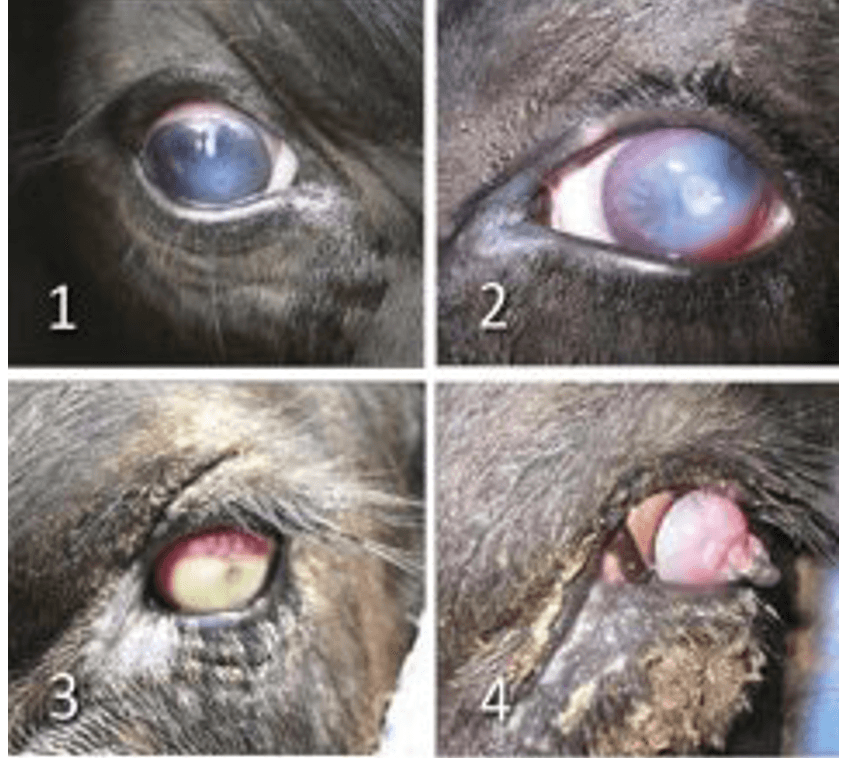
The clinical signs of pinkeye vary with the severity and progression of the disease
- Stage 1 - cattle have excessive tearing, blinking and squinting due to increased sensitivity to light and pain. As the disease progresses, a small ulcer will appear in the centre of the cornea which appears cloudy
- Stage 2 - The ulcer becomes large and deeper and the eye becomes increasingly cloudy. Blood vessels begin to grow across the cornea which make the eye look pink
- Stage 3- The ulcer covers the entire surface of the eye and extends into the inner structures of the eye. This leads to severe inflammation which makes the eye appear yellow
- Stage 4 - The ulcer extends completely through the cornea resulting in the eye rupturing. The iris will plug the rupture and may protrude through the ulcer. At this stage the animal will not regain sight in this eye and they eyeball may collapse or end up being permanently swollen (glaucoma)
Prevention & management strategies
Prevention of pinkeye revolves around controlling flies, reducing competition around hay and grain feeders, minimising yarding, optimising health and nutrition, vaccination and isolating affected animals from the rest of the mob to reduce spread if possible.
Fly control must strategies be multi-pronged. Topical repellents (Imperial Pour-On) applied to cattle regularly can be an important control method. Insecticidal ear tags (Cylence Ultra) are also available that can be effective for longer term fly control (up to 12 weeks). Baits and surface sprays (QuickBayt and Quick Spray), Insect Growth Regulators (Cyromazine) are important in controlling flies in areas such as calf sheds. Parasitic wasps can be released regularly into the environment for biological control and are available from Bugs for Bugs. An effective fly-control program needs to be started early in the fly season to prevent a build-up of larvae and pupae that will continue to hatch over summer.
Vaccination is an important part of any pinkeye control program. Piliguard covers 3 of the 5 strains of M. bovis present in Australia - so it is not 100 percent effective in preventing pinkeye, but surveys have shown that in about 70 % of outbreaks, at least one of the three strains present in the vaccine is involved. The vaccine needs to be administered 3 - 6 weeks before the start of the pinkeye season as a single vaccination. Immunity will last for about 5 - 6 months. Calves as young as 2 weeks old can be vaccinated. The vaccine is an oil-emulsion vaccine and accidental “self-inoculation” is serious - seek immediate medical advice if this occurs!
Treatment of pinkeye is often frustrating and time consuming - prevention is the key!
Pinkeye can be a complex disease to prevent, control and treat and requires a multi-pronged approach that includes vaccination, control of important risk factors and effective treatment programs.