&geometry(315x90) "Gippsland Veterinary Group")
Keeping Your Dog Safe on Our Beautiful Beaches
Pet safety whilst visiting the beach - what do you need to know?
1. Local Rules & Wildlife Protection
- Victorian councils enforce zones: off-leash, time-restricted, on-leash, and no-dog areas. Always check signage and respect wildlife zones, especially during wildlife nesting seasons
- Snakebite risk: coastal dunes and grassy areas can harbour venomous snakes. Symptoms include sudden weakness, vomiting, paralysis
Action: keep dogs on-leash near vegetation, avoid tall grass, and seek immediate veterinary care if bitten
2. Saltwater & Sand Hazards
- Salt toxicity: drinking seawater can cause vomiting, diarrhea, seizures, and coma
Prevent by: bringing fresh water and rinsing dogs after swimming
- Sand impaction: dogs licking or eating sand risk intestinal blockages
Prevent by: Monitoring play and discouraging sand ingestion
3. Heat, Sun & Surface Risks
- Heatstroke: high temperatures can lead to collapse or worse
- Sunburn: thin-coated and pale skinned dogs can burn on noses, ears, and bellies
- Burnt paws: hot sand can scorch paw pads
Protect by: Visiting early/late, using shade, pet-safe sunscreen, and checking sand temperature
4. Marine & Environmental Hazards
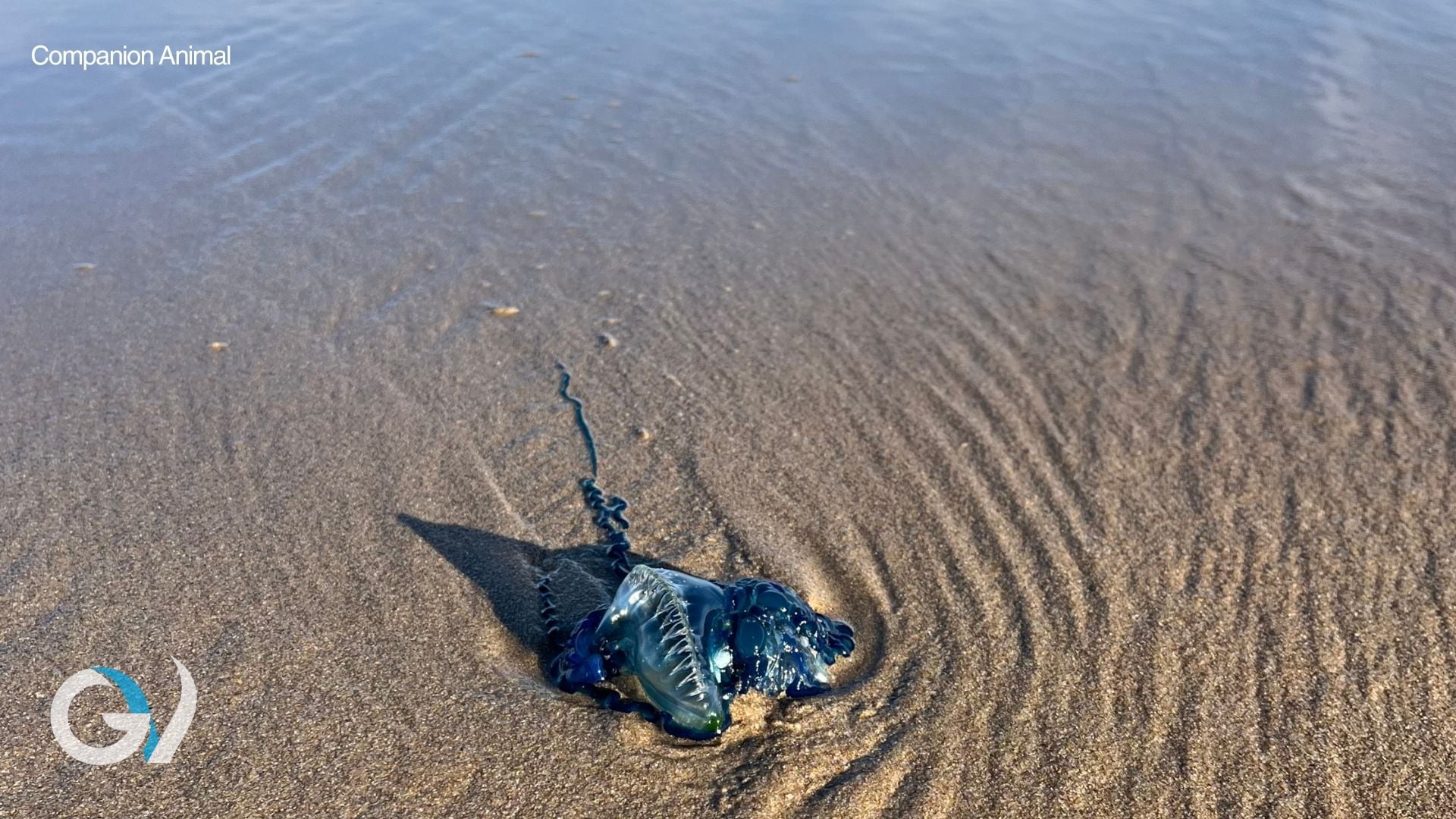
- Jellyfish & bluebottles: stings cause pain and swelling
First-aid: rinse with seawater, remove tentacles, apply vinegar (for box jellyfish) or heat packs (for bluebottles), and consult a vet
- Sea hares: toxic if ingested - can cause seizures and death
- Toxic algal blooms: avoid stagnant green water; can cause liver failure and death
- Pufferfish toxicity: washed-up pufferfish contain tetrodotoxin, which is deadly even in small amounts. Symptoms: drooling, vomiting, paralysis, seizures
- Decaying material: rotting animal or plant material can contain bacteria and mould toxins that can create severe illness in our pets
Action: prevent dogs from sniffing or eating dead fish on the beach
5. Currents, Tides & Physical Hazards
- Rip currents & waves: dogs can easily be swept away - even close to shore
Safe practice: stick to shallow areas, use dog life jackets, and supervise closely
- Shells, hooks & debris: sharp waste can cut paws or be ingested
Care: scan the beach and clean paws after
6. First-Aid & Emergency Readiness
- Pack essentials: fresh water, shade, pet-safe sunscreen, towels, first-aid kit
Emergency tips:
- Snakebite: keep dog calm, immobilise, and rush to vet
- Pufferfish ingestion: immediate veterinary care - do not wait for symptoms
- Jellyfish sting: rinse, remove tentacles, apply vinegar or heat packs, and seek vet help
- Recall training: teach “leave it” and reliable recall to prevent ingestion of hazards
If your pet shows any signs of illness of distress after a visit to the beach; don't wait, contact your closest GVG clinic immediately. Click here for contact details for all of our locations. Call any of our clinics after hours to access veterinary advice and/or treatment.