&geometry(315x90) "Gippsland Veterinary Group")
Coccidiosis in Calves and Lambs | Prevention, Signs and Treatment
Coccidiosis in calves and lambs: what you need to know
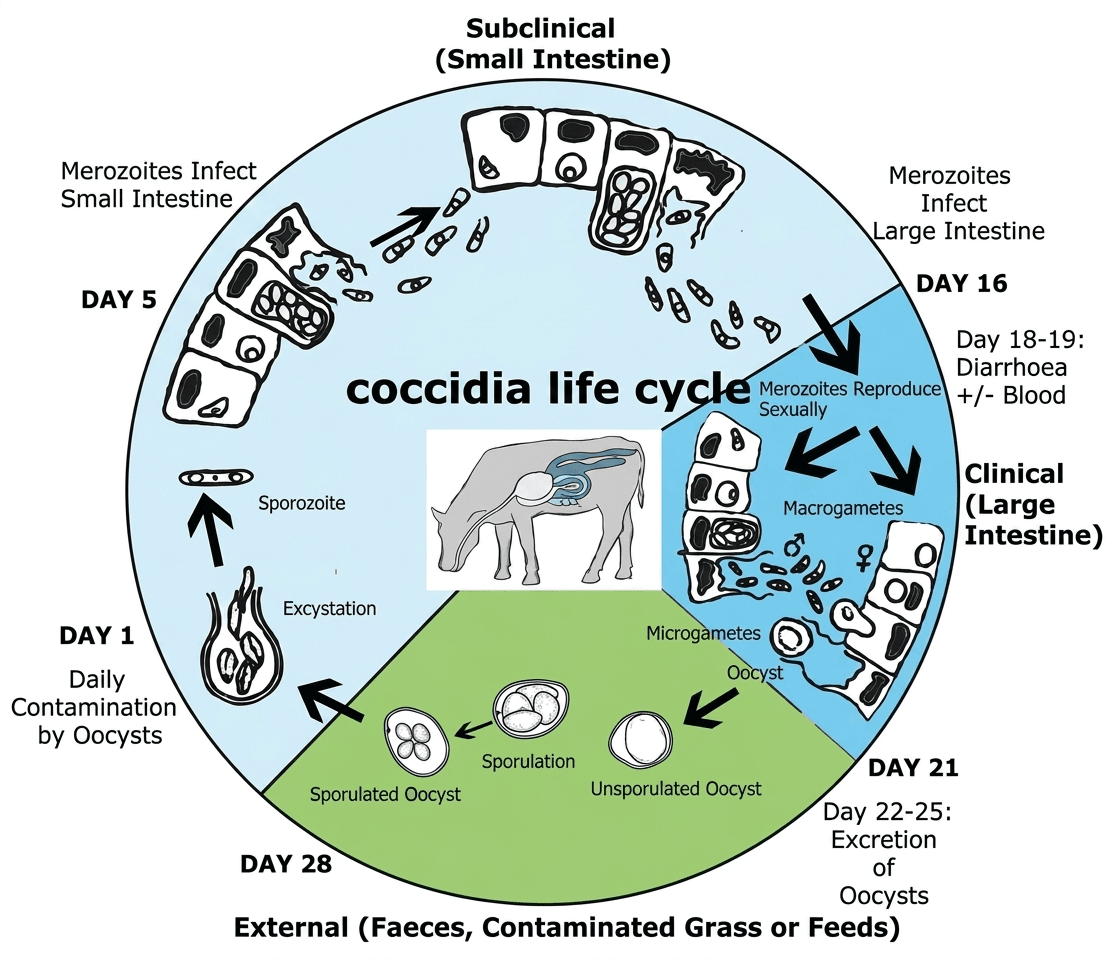
Coccidiosis is a common and often underestimated disease in young calves and lambs, particularly around the time of weaning and during the cooler, wetter months. Caused by protozoan parasites of the Eimeria species, this intestinal infection can lead to significant health setbacks and economic losses.
Weaning is a stressful time, involving dietary changes, group mixing, and often housing transitions. These stresses can suppress immunity, making calves more susceptible to infections, including coccidiosis.
The parasite is commonly spread via faecal oral transmission. Once ingested, Eimeria organisms invade the gut lining, causing damage that leads to reduced nutrient absorption, diarrhoea, and in severe cases, long term growth issues or death.
Clinical signs of coccidiosis can include:
? Mild to severe diarrhoea, often bloody
? Straining or signs of abdominal pain
? Weight loss or poor growth rates
? Nervous signs such as convulsions (very rare)
? In severe cases, death
? Clinical coccidiosis does not occur in animals less than about 3 weeks of age
? A diagnosis of coccidiosis can be strongly suspected based on clinical signs and is easily confirmed with a faecal smear under a microscope
Some animals may carry the infection without showing signs, yet still shed large numbers of oocysts, infecting others. If you have some clinically affected calves or lambs in a mob, then you can safely assume all animals in the mob are infected to varying degrees.
Preventing and controlling coccidiosis requires a combined approach:
1. Hygiene and management
? Regular cleaning of pens, feeders, and water troughs to reduce environmental contamination
? Avoid overstocking: crowding increases stress and exposure
? Provide dry, clean bedding and ensure good drainage
? Minimise stock movement and mixing during and shortly after weaning
2. Monitoring and early detection
? Watch for clinical signs, especially 1-2 weeks after weaning
? Use faecal sampling to confirm diagnosis and monitor parasite load
3. Medications and feed additives
? Coccidiostats, such as sodium monensin (Rumensin) or lasalocid (Bovatec), can be included in feed or milk to suppress coccidia multiplication. Care is needed with dose rates, as calves can easily be underdosed resulting in poor control, or overdosed resulting in toxicity where multiple feeds are medicated
? Clinically affected animals can be treated with toltrazuril (Coxidox), which can also be used effectively as a preventative if administered just before the risk period around weaning
4. Good general nutrition
? Healthy, well fed calves and lambs are more resistant to disease in general, but especially coccidiosis
While coccidiosis is common, it does not have to be a major problem. With good hygiene, strategic use of medication, and careful management, outbreaks can be minimised or even prevented.
If you suspect coccidiosis or want to discuss a prevention program, contact one of our vets for tailored advice.