Cattle Vaccinations | The Key Info
Cattle Vaccination Guide: What Should You Be Vaccinating For?
With a wide range of cattle vaccines available, working out what is relevant to each class of stock can sometimes be confusing.
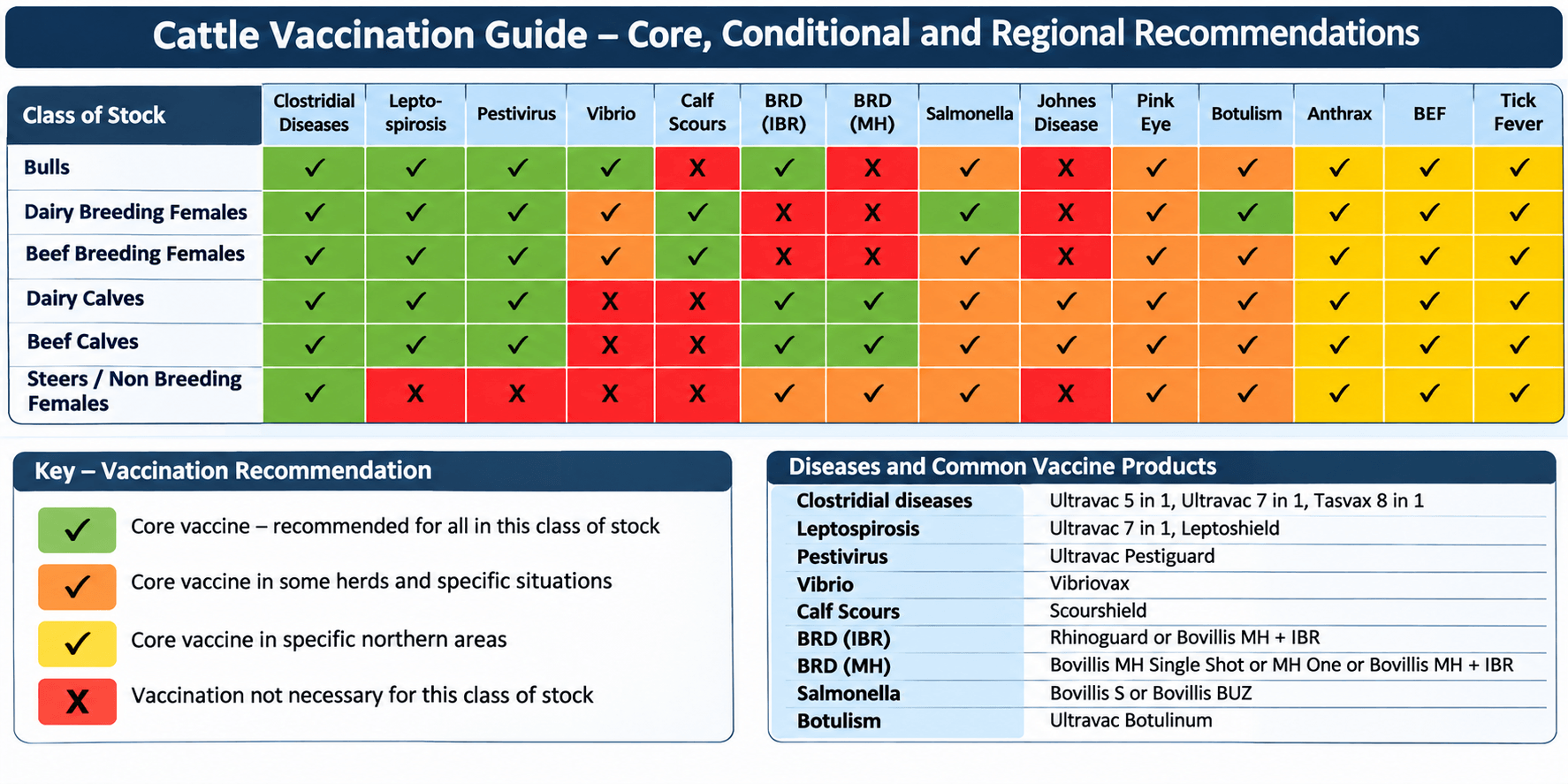
Our vet team has put together this quick-reference Cattle Vaccination Guide to help make vaccination planning a little easier. It covers bulls, breeding females, calves and non-breeding stock, and provides a snapshot of which vaccines may be considered core, conditional or region-specific.
The guide covers common cattle health risks including clostridial diseases, leptospirosis, pestivirus, vibriosis, calf scours, bovine respiratory disease (BRD), salmonella and more.
Every herd is different, and vaccination requirements can vary depending on location, herd history, management system, biosecurity risks and disease exposure. Use this guide as a starting point, and speak with your veterinarian about developing a vaccination program suited to your herd.
Save or bookmark the guide for an easy reference next time you’re planning your cattle vaccinations.
Core vaccines:
Ultravac 7 in 1- protects against the major clostridial diseases and also leptospirosis which can be a significant source of reproductive losses.
Pestiguard - all bulls need to be tested negative (ear notch) and vaccinated against pestivirus. Reproductive losses and calf losses through persistently-infected calves can be devastating in naïve herds.
Vibrovax - vibriosis can cause significant reproductive losses and ongoing infertility in cows and heifers
Rhinoguard - Infectious Bovine Rhinotracheitis (IBR) can cause infectious pustular balanoposthitis (IPB) in bulls and infectious pustular vulvovaginitis (IPV) in cows and heifers. IPB causes painful ulcers on the penis and prepuce resulting in severe pain and a reluctance to serve cows. It is also shed in the semen directly impacting sperm quality and also causing IPV in cows and heifers which can cause reproductive losses.
When buying bulls, never assume they have been fully vaccinated or tested negative for pestivirus and a quarantine drench with a dual active drench will prevent the spread of resistant worms to your property
Timing and protocols
Vaccinate bulls well before joining to allow immunity to develop. Most vaccines require two initial doses 4 - 6 weeks apart and then an annual booster for long-term protection.
All bulls should receive a worm drench at the time of vaccination - combination drenches such as Cydectin Platinum or Dectomax V are most effective and reduce the risk of worm resistance.
Bottom Line
Vaccination is a cost-effective insurance policy for herd fertility and health. A proactive program safeguards bulls, protects your investment, and supports sustainable production.