&geometry(315x90) "Gippsland Veterinary Group")
A Healthy Mouth, a Happier Horse
Routine dental care is essential to your horse’s health, performance, and comfort. But not all dental work is created equal.
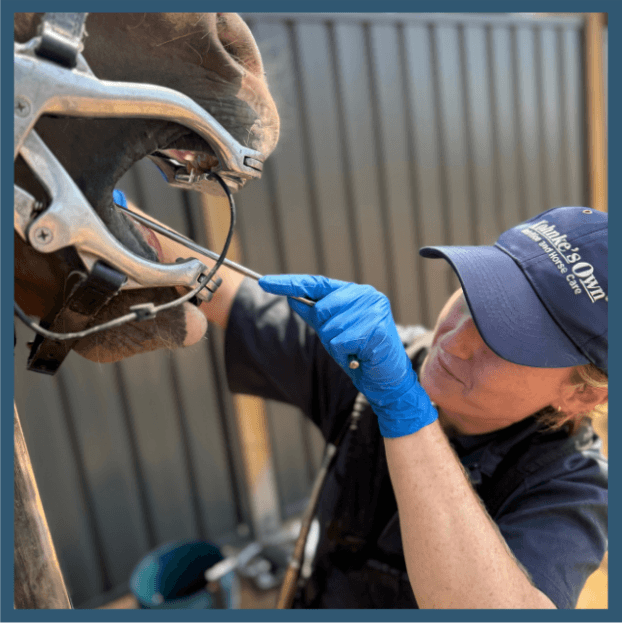
When a qualified veterinarian performs equine dentistry under sedation, your horse receives the highest standard of care.
Why sedation makes a difference:
- Full-mouth examination - Sedation allows your vet to examine every tooth, including the tricky back molars.
- Improved safety - Calm horses mean reduced risk of injury to horse, handler, and vet.
- Pain management - Vets can provide appropriate sedation, pain relief, and medication if needed.
- Disease detection - Vets are trained to spot fractured teeth, infections, or other hidden issues.
- Precision treatment - Dental tools are more effective and precise when used on a relaxed, still horse.
Safer. Calmer. More effective.
A sedated horse is easier to treat thoroughly and comfortably. Your vet can perform a complete oral exam using light, mirrors, and instruments with much less resistance and stress. This allows:
- Accurate floating
- Detection of ulcers or loose teeth
- Smoother experience for your horse
- Fewer behavioural issues caused by dental pain
How often should my horse's teeth be checked?
- Most horses: every 12 months
- Young horses (2-5 yrs): every 6-12 months
- Senior horses or those with known dental issues: as recommended by your vet
Signs your horse may need a dental exam:
- Dropping feed or “quidding”
- Weight loss despite good appetite
- Head tossing or bit resistance
- Foul breath
- Unusual swellings/discharge around the jaw
Invest in long-term health
Veterinary dental care under sedation might cost slightly more upfront, but it prevents bigger problems later — saving you time, stress, and expense. It can also:
- Improve feed efficiency - make sure your horse is getting the full nutritional benefit of their feed, by enabling optimal chewing.
- Prevent pain-related behavioural issues.
- Help maintain condition and performance.